
The University of Pittsburgh Emergency Medicine Residency offers its trainees superb exposure and training in all aspects of contemporary prehospital care, a central and critical area of emergency practice. The residency program is integrally involved with the operations of the City of Pittsburgh Bureau of Emergency Medical Services, considered to be one of the premier prehospital care systems in the United States.
City of Pittsburgh Public Safety
City of Pittsburgh paramedics respond to more than 65,000 calls annually, of which about 5% require orders from a medical command physician. Of these, approximately 6,000 are trauma cases and 350 are cardiac arrests. Approximately 160 full-time professional paramedics operate the system's 16 mobile intensive care units and two fully equipped rescue vehicles. Dedicated EMT trucks provide BLS level care, and the City of Pittsburgh Fire Bureau personnel serve as medical first-responders to all high-priority calls.
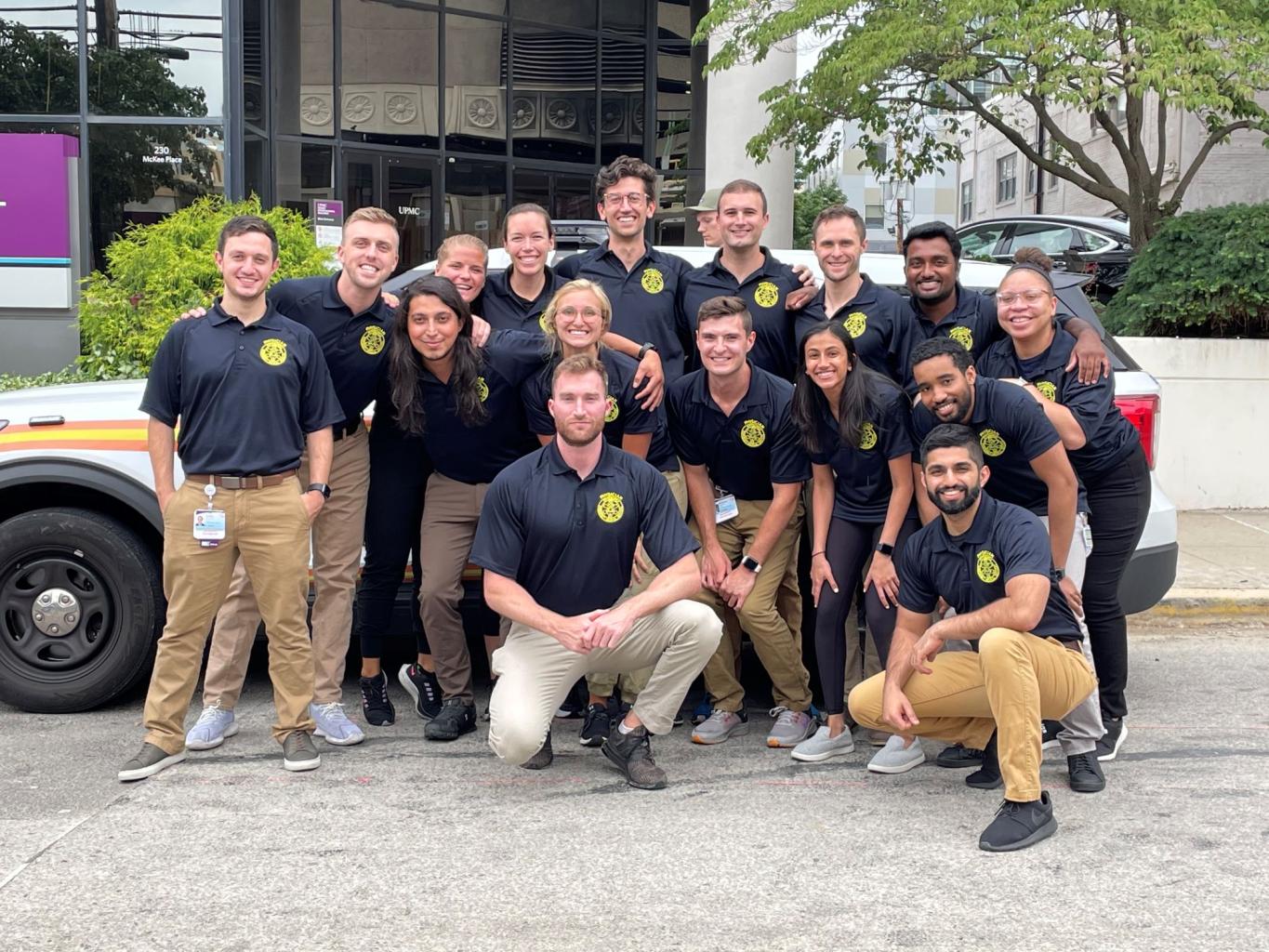
City of Pittsburgh EMS also provides river rescue, hazmat, and tactical EMS Services. The system's medical director and associate medical directors are residency faculty, and all emergency medicine faculty are certified medical command physicians. The program firmly believes that a working knowledge of prehospital care and emergency medical services cannot be gained solely in the classroom, but must be acquired in the community as well. As such, a unique prehospital care rotation has been developed for residents at the second- and third-year levels. A resident is always in radio contact with the system's dispatcher. Monitored on-line by a faculty physician, the resident gives orders to city paramedics and, if necessary, responds on-scene to direct the patient's care in person. This level of hands-on resident involvement is unique to our program. Didactic material designed to supplement this experience familiarizes the resident with the administrative, logistic, and operational aspects of an emergency medical services system. The opportunity to work closely with one of the finest prehospital care systems in the world provides an unrivaled experience for trainees, many of whom go on to assume leadership roles in EMS.
STAT MedEvac
STAT MedEvac, a service of the Center for Emergency Medicine of Western Pennsylvania, provides air medical transport of patients with critical illness and/or injuries. The organization completed its first patient transport in February, 1984. Today, STAT MedEvac consists of eighteen rotor-wing base sites and performs 13,000 patient transports per year.
Emergency medicine residents play a major role in the program by working as Flight Physicians alongside critical care Flight Nurses and Flight Paramedics on inter-hospital transports and scene runs.
This outstanding opportunity offers residents a unique experience in emergency transport and critical care, with exposure to emergency medical systems operating in urban, suburban, and rural environments. Residents also participate in specialized transports that include the use of intra-aortic balloon pumps, ECMO, and left ventricular assist devices.
Special Events
Providing medical coverage for mass-gathering events is an integral part of training in emergency medicine. The City of Pittsburgh offers a wealth of opportunities for residents to gain this experience. In addition to providing daily medical command for the City of Pittsburgh Bureau of EMS, residents cover University of Pittsburgh football games, Pittsburgh Steelers football, the Pittsburgh Marathon, the Pittsburgh Great Race, major professional Golf Outings, and the Three Rivers Regatta. Rock concerts also require medical coverage!